
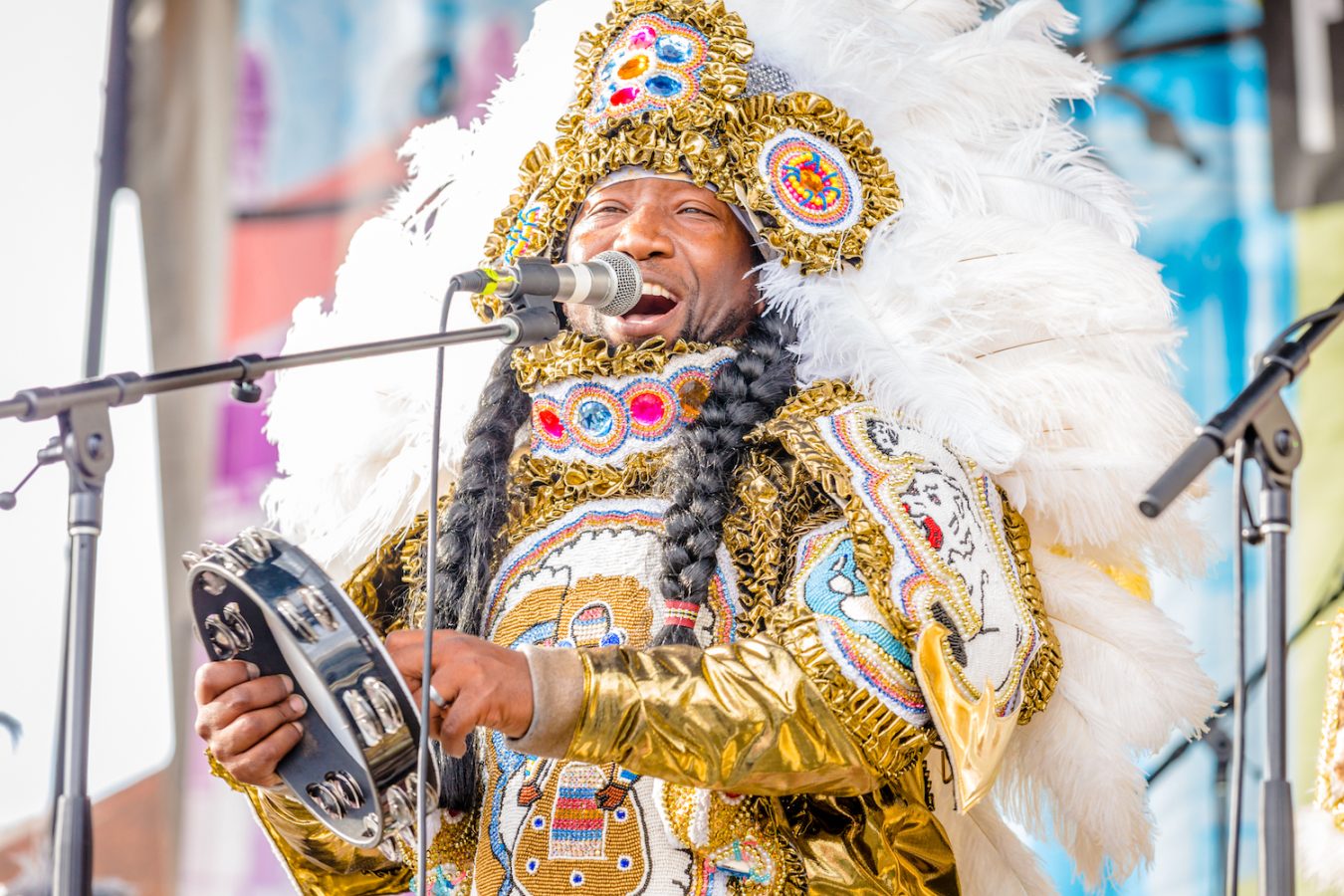
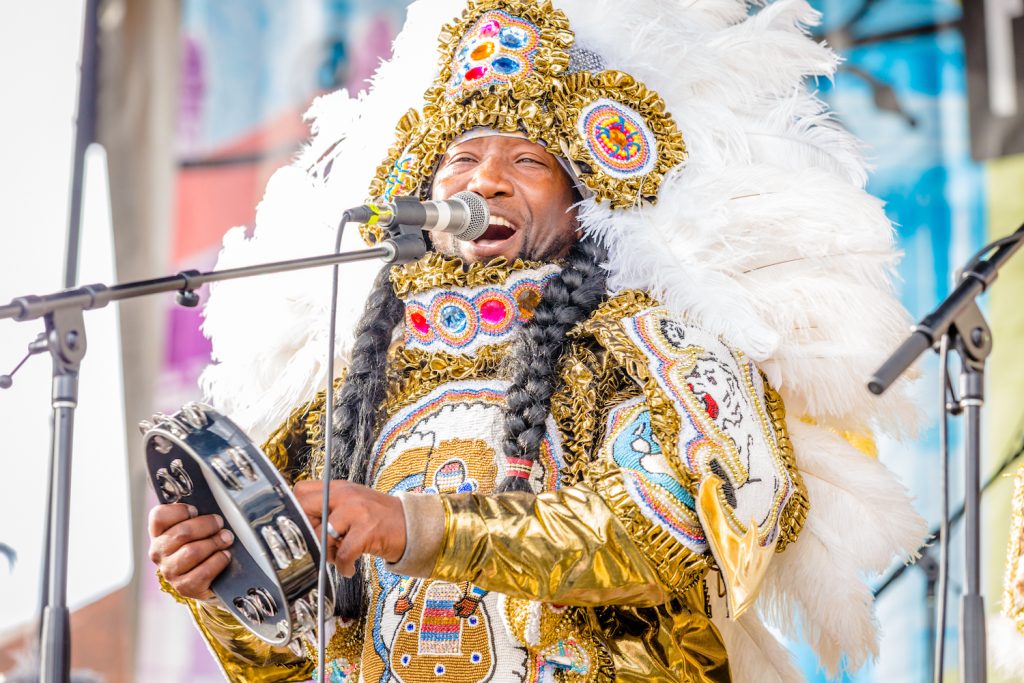
For four days (Thursday-Sunday, April 16-19, 2026), a big chunk of the French Quarter — also known as the Vieux Carré, French for the “old square” (or “old quarter”) — will be transformed into a series of festival stages, each showcasing a different brand of music either rooted in, or heavily influenced by, the sounds of Louisiana.
Getting around the Quarter when there’s not an enormous music festival can be daunting. Getting around when there’s a band on, seemingly, every corner, is kind of intimidating. Here’s our guide to getting the best out of the French Quarter Fest, plus what’s new in 2026.
Woldenberg Riverfront Park
Most of the FQ Fest’s main stages are concentrated along the waterfront of the Mississippi River in the French Quarter. The 2019 festival also added a new stage, the Pan-American Life Insurance Group Stage, on the Riverfront Moonwalk, right across from Jackson Square. This year, there’s one more site expansion (more on that below).
On the Riverfront, you’ll see the steps that lead down to the water, marking the spot where, every Mardi Gras, the Society of St. Anne and the Society of St. Cecilia enter the waters to bid farewell to something from the previous year and pay tribute to the departed loved ones.
Need a tropical drink to beat the heat? While we’re not a city immediately known for tiki drinks, one of the finest tiki bars in the South is located just nearby: Beachbum Berry’s Latitude 29.
The French Market & The Mint
The other side of Jackson Square is also a nexus of music stages and, importantly, food! Dozens of this city’s best vendors will be at the New Orleans Jazz Museum, located in the Old U.S. Mint building at the corner of Decatur Street and Esplanade Avenue. The Mint is undergoing renovations this year, but will remain a major hub of the festival.
The French Market nearby is absolutely worth exploring, with its arts and crafts vendors, food stalls, and an incredible vibe. If you’re in need of a bite to eat and want to try a classic Cajun diner, you can’t go wrong with Coop’s Place. If you want some liquid refreshments, Molly’s at the Market is one of our favorite neighborhood bars in the city.
Royal Street
Usually, Royal Street is an unbroken string of serious antique shops and art galleries. During French Quarter Fest, expect that scene to get livened up by several smaller music stages.
Decatur Street
Notable for the Bienville Statue, Decatur Street is where you’ll find Cajun and Zydeco music playing all weekend long. This is some of our favorite dance music anywhere.
Jackson Square
The “town square” of New Orleans, as it were, Jackson Square is a geographic lynchpin for the entirety of the French Quarter, so expect it to be filled with food vendor booths for the duration of the fest, and as vibrant as ever. It will also be the location of many of the French Quarter Festival’s special events, including the opening-day ceremony and parade.
Bourbon Street
Bourbon Street has a reputation as a hard-partying locus of bachelor parties and wild weekend trippers, but during French Quarter Fest, it showcases no less than four smaller musical stages, including the lovely Jazz Playhouse at the Royal Sonesta. The festival will also kick off with a parade on the 100 block of Bourbon St.
What Is New in 2026?
This year, the festival organizers are providing more space by expanding to the new site at the Woldenberg Riverfront Park near Governor Nicholls Street wharf, allowing more space for food and music along the Mississippi River.
According to the organizers, there are some stage location changes. The Pan-American Life Insurance Group Stage will return at Governor Nicholls Park at the foot of Esplanade, and will feature four full days of programming.
Due to construction at the New Orleans Jazz Museum, the Louisiana Fish Fry Stage will temporarily move to the riverfront in front of the Audubon Aquarium. The stage will feature an expanded mix of DJs and brass bands, with the schedule also extended to four days.
The House of Blues Voodoo Garden Stage will feature an expanded music lineup with four full days of stage programming and a Thursday night FQF After Dark show.
Although the New Orleans Jazz Museum is undergoing reconstruction, it will remain a major site for programming Friday through Sunday, including performances at the Loyola University Esplanade in the Shade Stage and the Songwriter Stage.
There’s also a 5K race this year, taking place on Saturday, April 18. Registration is now open, with details available at https://runsignup.com/fqf5k.
Music Lineup
The who-is-who of the local music scene is returning or joining this year, over 300 acts total. Expect beyond excellence when it comes to the French Quarter Fest music lineup. That includes Irma Thomas, the Soul Queen of New Orleans, Hasizzle with TBC Brass Band, Cyril Neville, and Sally Baby’s Silver Dollars, along with a highly anticipated debut from Dawn Richard. Grammy-winning native PJ Morton is the headliner, marking his first appearance since 2014. Check out the full music schedule on the fest’s website.
Food Vendors
As in the previous year, expect a mouthwatering melting pot of traditional New Orleans dishes such as fried shrimp or catfish, stuffed crabs, locally brewed beers, meat pies, crawfish macaroni and cheese, and hot sausage po-boys. Beyond that, there will be plenty of global flavors.
The organizers promise “over 275 culinary experiences.” (Here’s the vendor info.)
A new vendor this year is Chicken’s Kitchen. Our favorite vendors that are returning include Vaucresson Sausage, Ms. Linda the Yakamein Lady, Thai Nola, Southern’s, Dickie Brennan’s Bourbon House, Loretta’s Authentic Pralines, and many more.
The Mike’s Amazing Culinary Stage also returns with live cooking demonstrations and storytelling that celebrate New Orleans’ rich food traditions. Mike’s Amazing team will be sharing recipes and pairing ideas.
There’s also a new beverage from a major festival sponsor, Abita. The company will debut Upbeat Vodka Cocktails.
Special Events
Every year, the festival features special events. Here are the 2026 highlights.
The French Quarter Festival Kickoff Parade and Opening Day Ceremony
The annual parade is held this year on Thursday, April 16, at 10 a.m. The parade departs from the 200 block of Bourbon Street down to St. Ann Street, where it turns and makes its way to Jackson Square for the Annual Opening Day Ceremony.
Dance Classes
The French Market Traditional Jazz Stage and the Chevron Cajun-Zydeco Showcase will feature dancing and classes in traditional Jazz, 1920s Charleston, swing, Cajun jitterbug, and zydeco. Classes are taught by professional dancers and are free and open to the public. Check out the lesson schedule on the festival’s website.
French Quarter Fest After Dark
The festival offers nighttime programming at various local venues from 9 p.m. to midnight to keep the good times rolling after the last festival stage closes at 8 p.m.
… And more
On top of all this, the festival features installations, exhibits, immersive experiences, kids’ events, the 2026 French Quarter Fest Official Poster signing, interviews, and more.
Getting Around
Getting around the Fest should be fairly easy if you’re walking or biking. Parking will be limited, so arrive early and try these lots: French Market, 500 Decatur Street, 300 North Peters Street, 211 Conti Street, The Garage at Canal Place, plus street parking within walking distance.
We do suggest that instead of driving, you use RTA buses, streetcars, rideshare services, bikes, cabs, or the ferry to get to the festival. In addition to increased traffic, some streets will be closed for the duration of the festival, beginning at approximately noon until 8:30 p.m.
A Few Facts About French Quarter Fest
Here are a few facts about the fest:
- The Fest celebrates local music and represents every genre from traditional and contemporary jazz to R&B, New Orleans funk, brass bands, folk, gospel, Latin, Zydeco, classical, cabaret, and international. It’s a medley, and a great way to sample the local music scene.
- It debuted in 1984 as a way to bring residents back to the Quarter following the World’s Fair and extensive sidewalk repairs in the French Quarter.
- The Fest employs more than 1,800 local musicians, with over 60 local restaurants participating as culinary vendors.
- The food and beverage vendors are set up in several locations throughout the French Quarter: Jackson Square, the Jazz Museum at the Mint, JAX Brewery, and Woldenberg Riverfront Park.
- You can buy the official 2026 poster at one of the four merch booths at the festival, as well as online.
- To streamline your music experience and navigation, you can download the app on the fest’s website (either for IOS or Android).
- The live-music hours every day of the festival are 11 a.m. to 8 p.m.
- No coolers and ice chests, please. Help keep the festival free by purchasing food and beverages at the festival.
- And yes, the fest is free unless you opt to buy a pass for a VIP experience.
So, what’s the history of the French Quarter?
Glad you asked!
They don’t call this neighborhood the “old square” for nothing. The French Quarter was the original city of New Orleans, founded in 1718 by Jean-Baptiste Le Moyne de Bienville. Rampart Street is named as such because it once marked the actual city walls (or ramparts) of New Orleans. The city centered on the Place d’Armes, now known as Jackson Square, was originally built as a military parade ground where criminals were hanged in public.
The name “French Quarter” is a bit of a misnomer; New Orleans was under Spanish rule from 1762 to 1802, and it was during this period that two huge fires (in 1788 and 1794) seared away much of the original architectural façade of the Quarter.
Thus, the buildings you see today retain more of a Spanish than French sensibility, as evidenced by wraparound balconies (which create a shady, breezy median space between the street and private residences — a useful architectural trick in hot, pre-AC New Orleans) and lush courtyards painted in bright colors, which form a reflective patina that wards off the sun.
The best example of actual French colonial architecture in the Quarter is the Old Ursuline Convent, which is also the oldest building in the Mississippi River Valley (built in 1752). With that said, the streets of the French Quarter are largely named in honor of French nobility — Burgundy, Chartres, and, yes, Bourbon.
If the French Quarter marks the original layout of New Orleans, then the original inhabitants were the Creoles, people of French, Spanish, and eventually mixed French and Spanish descent. That phenomenon is eloquently realized when one considers the names of two of the main buildings on Jackson Square: the (Spanish-origin) Cabildo and (French-origin) Presbytère. It is also worth noting that St. Louis Cathedral, which dominates Jackson Square, is the oldest continuously operating cathedral in the USA, and a fine example of French Colonial architecture in its own right.
Although the Creoles called the French Quarter home for many decades, they began moving out as the area became more depressed and ramshackle, especially in the early 20th century. That was when city officials shut down the vice in the red-light district of Storyville.
In response, the purveyors of sin crossed Rampart Street into the Quarter, and the Creoles moved out, to be gradually replaced by Italian immigrants. Later, also came the bohemians, attracted by the area’s undeniable architectural charms, as well as the members of the LGBTQ+ community seeking tolerance.
In 1965, the Vieux Carré Historic District was established, allowing for the preservation of the Quarter’s historic character. The 1984 World’s Fair turned the Quarter into a bustling tourism destination, which is around the same time that many residents began leaving the neighborhood.
The Quarter tends to weather hurricanes and storms pretty well. Power lines are built underground, and the neighborhood itself was built on “high ground” (well, a few feet of elevation, but that’s enough) — which keeps it immune from flooding.
Today, while the Quarter is largely an area for tourists, thousands of residents still call it home.
Coming to the French Quarter Fest this spring?
Take advantage of the French Market Inn specials, group rates, and best-rate guarantee for greater savings to spend on New Orleans famous French Quarter cuisine and enjoying everything this magnificent city has to offer. Reserve your room today!