
New Orleans Jazz & Heritage Festival 2026

It’s almost that time of year again — time to sip the iced tea, snack on crawfish Monica, and sway to the music of local and international musicians under the hot New Orleans sun. The New Orleans Jazz and Heritage Festival, or Jazz Fest, is one of the most celebrated festivals in New Orleans and takes place every year during the last weekend of April and the first weekend in May. Jazz Fest has been around since 1970 and gets bigger and better every year.

During these two weekends, locals and out-of-towners get together to enjoy the culture of New Orleans with the various food, crafts, and performances that Jazz Fest has to offer. Contrary to the name, the New Orleans Jazz and Heritage Festival is more than just jazz music.

Various musical genres like hip-hop, zydeco, blues, tribal, and electronic music can all be heard live from Jazz Fest’s multiple stages. This year the New Orleans Jazz and Heritage Festival will take place at its usual spot on the Fair Grounds Race Course & Slots (1751 Gentilly Blvd.) starting on Thursday, April 23, and ending on Sunday, May 3, 2026.

Some of the top headliners for the festival include The Eagles, Stevie Nicks (her only 2026 show), Rod Stewart (on his farewell tour), and David Byrne. Among the local favorites, you can expect Irma Thomas, Trombone Shorty & Orleans Avenue, Jon Batiste, Big Freedia, Preservation Hall Jazz Band, and many more.

Other popular acts include Kings of Leon, The Black Keys, Widespread Panic, and hundreds more. The music schedule is broken down by day in cubes with times for all the acts, which you can view here.

Of course, one of the best parts of Jazz Fest is the food. Some staples for food include mango freezes, ya-ka-mein, snoballs, poboys, and much more. Here’s the list of 2026 food vendors.

What to Know About the 2026 Jazz Fest

  • Jazz Fest will remain cashless. Ticket, food, beverage, craft, and merchandise booths no longer accept cash payments. If you come to the event with only cash, the Festival will offer two cash exchange booths near key vending locations so you can get a prepaid card for your cash.
  • This year, Jazz Fest features over 5,000 musicians across 15 stages.
  • The festival will be one of the largest in its 55-year history. Eight is the most number of days for the event, and this year there will be the most food vendors and food items ever. And there will also be over 250 arts and craft vendors.
  • “Locals Thursday” will be April 23 this year, with discounted tickets for Louisiana residents.
  • This year, Jazz Fest will celebrate Jamaica’s musical and cultural diversity at the Cultural Exchange Pavilion. During the festival, dozens of bands and a wide variety of artisans from throughout Jamaica will present their sounds and traditions.
  • The Jazz & Heritage Gala kicks off Jazz Fest with the celebration of Louisiana music and cuisine on Wednesday, April 22, at Generations Hall (310 Andrew Higgins Blvd.).
  • Check out the event’s FAQ section for more details.

Are You Attending Jazz Fest?

We’d love for you to stay with us! Take advantage of our specials, group rates, and best-rate guarantee for greater savings to spend on New Orleans famous cuisine and enjoy everything this magnificent city has to offer. Reserve your room today!

Also, consider booking a guided tour of the famous St. Louis Cemetery No. 1 to experience the hauntingly beautiful past of New Orleans. And, for easy, informative sightseeing, we recommend the City Sightseeing New Orleans city tour on the open-top, double-decker bus. It runs every 30 minutes through the Garden District, French Quarter, and CBD. You can hop on and off anytime!
Get the Most Out of the French Quarter Fest

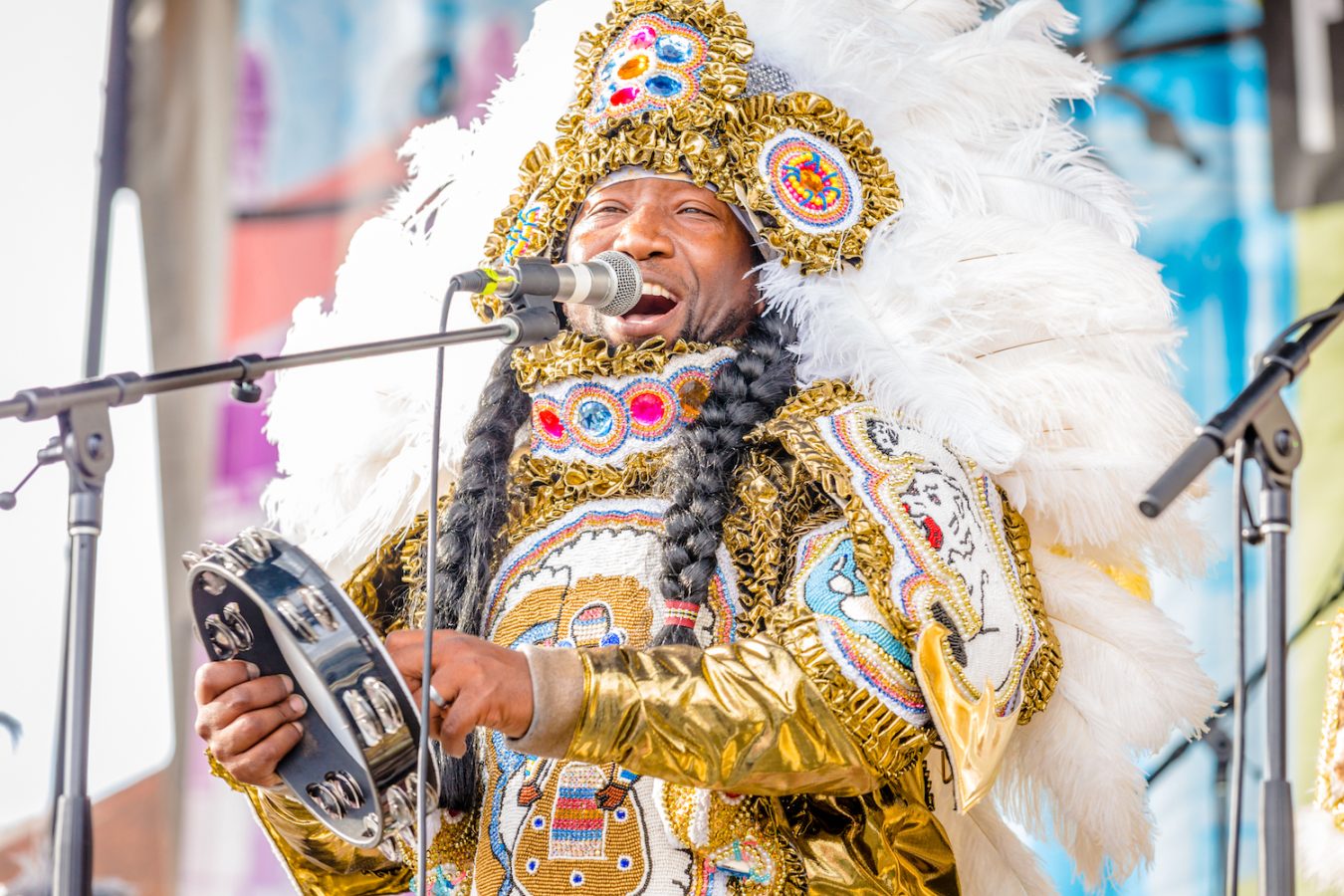
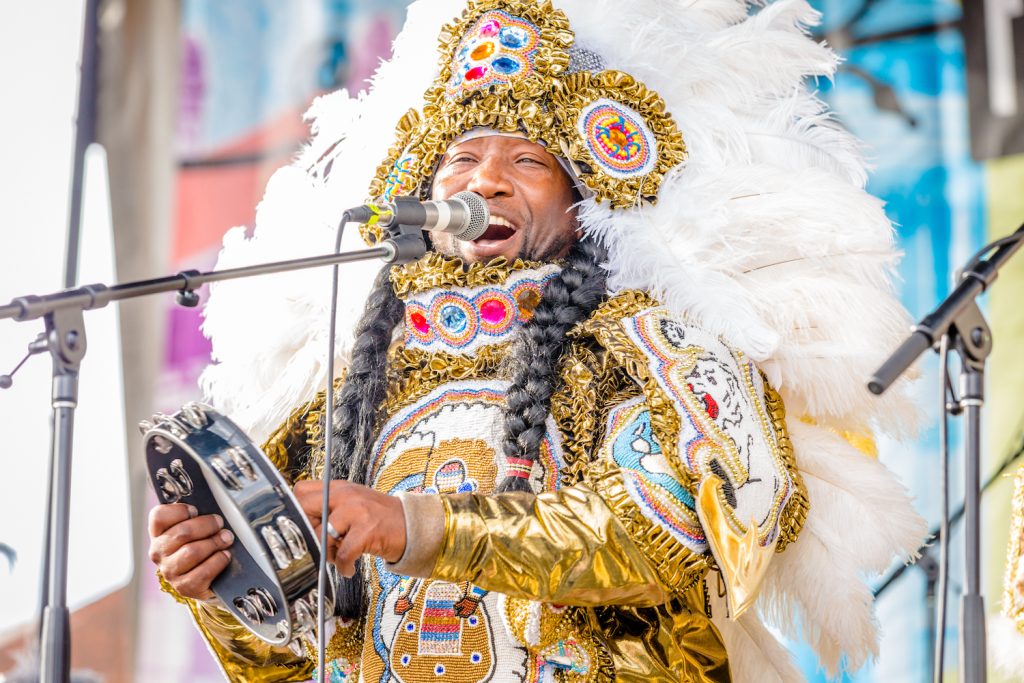
Big Chief Juan Pardo and the Golden Comanches. Photo by Justen Williams.

For four days (Thursday-Sunday, April 16-19, 2026), a big chunk of the French Quarter — also known as the Vieux Carré, French for the “old square” (or “old quarter”) — will be transformed into a series of festival stages, each showcasing a different brand of music either rooted in, or heavily influenced by, the sounds of Louisiana.

Getting around the Quarter when there’s not an enormous music festival can be daunting. Getting around when there’s a band on, seemingly, every corner, is kind of intimidating. Here’s our guide to getting the best out of the French Quarter Fest, plus what’s new in 2026.

Woldenberg Riverfront Park

Most of the FQ Fest’s main stages are concentrated along the waterfront of the Mississippi River in the French Quarter. The 2019 festival also added a new stage, the Pan-American Life Insurance Group Stage, on the Riverfront Moonwalk, right across from Jackson Square. This year, there’s one more site expansion (more on that below).

On the Riverfront, you’ll see the steps that lead down to the water, marking the spot where, every Mardi Gras, the Society of St. Anne and the Society of St. Cecilia enter the waters to bid farewell to something from the previous year and pay tribute to the departed loved ones.

Need a tropical drink to beat the heat? While we’re not a city immediately known for tiki drinks, one of the finest tiki bars in the South is located just nearby: Beachbum Berry’s Latitude 29.

The French Market & The Mint

The other side of Jackson Square is also a nexus of music stages and, importantly, food! Dozens of this city’s best vendors will be at the New Orleans Jazz Museum, located in the Old U.S. Mint building at the corner of Decatur Street and Esplanade Avenue. The Mint is undergoing renovations this year, but will remain a major hub of the festival.

The French Market nearby is absolutely worth exploring, with its arts and crafts vendors, food stalls, and an incredible vibe. If you’re in need of a bite to eat and want to try a classic Cajun diner, you can’t go wrong with Coop’s Place. If you want some liquid refreshments, Molly’s at the Market is one of our favorite neighborhood bars in the city.

Royal Street

Usually, Royal Street is an unbroken string of serious antique shops and art galleries. During French Quarter Fest, expect that scene to get livened up by several smaller music stages.

Decatur Street

Notable for the Bienville Statue, Decatur Street is where you’ll find Cajun and Zydeco music playing all weekend long. This is some of our favorite dance music anywhere.

Jackson Square

The “town square” of New Orleans, as it were, Jackson Square is a geographic lynchpin for the entirety of the French Quarter, so expect it to be filled with food vendor booths for the duration of the fest, and as vibrant as ever. It will also be the location of many of the French Quarter Festival’s special events, including the opening-day ceremony and parade.

Bourbon Street

Bourbon Street has a reputation as a hard-partying locus of bachelor parties and wild weekend trippers, but during French Quarter Fest, it showcases no less than four smaller musical stages, including the lovely Jazz Playhouse at the Royal Sonesta. The festival will also kick off with a parade on the 100 block of Bourbon St.

What Is New in 2026?

This year, the festival organizers are providing more space by expanding to the new site at the Woldenberg Riverfront Park near Governor Nicholls Street wharf, allowing more space for food and music along the Mississippi River.

According to the organizers, there are some stage location changes. The Pan-American Life Insurance Group Stage will return at Governor Nicholls Park at the foot of Esplanade, and will feature four full days of programming.

Due to construction at the New Orleans Jazz Museum, the Louisiana Fish Fry Stage will temporarily move to the riverfront in front of the Audubon Aquarium. The stage will feature an expanded mix of DJs and brass bands, with the schedule also extended to four days.

The House of Blues Voodoo Garden Stage will feature an expanded music lineup with four full days of stage programming and a Thursday night FQF After Dark show.

Although the New Orleans Jazz Museum is undergoing reconstruction, it will remain a major site for programming Friday through Sunday, including performances at the Loyola University Esplanade in the Shade Stage and the Songwriter Stage.

There’s also a 5K race this year, taking place on Saturday, April 18. Registration is now open, with details available at https://runsignup.com/fqf5k.

Music Lineup

The who-is-who of the local music scene is returning or joining this year, over 300 acts total. Expect beyond excellence when it comes to the French Quarter Fest music lineup. That includes Irma Thomas, the Soul Queen of New Orleans, Hasizzle with TBC Brass Band, Cyril Neville, and Sally Baby’s Silver Dollars, along with a highly anticipated debut from Dawn Richard. Grammy-winning native PJ Morton is the headliner, marking his first appearance since 2014. Check out the full music schedule on the fest’s website.

Food Vendors

As in the previous year, expect a mouthwatering melting pot of traditional New Orleans dishes such as fried shrimp or catfish, stuffed crabs, locally brewed beers, meat pies, crawfish macaroni and cheese, and hot sausage po-boys. Beyond that, there will be plenty of global flavors.

The organizers promise “over 275 culinary experiences.” (Here’s the vendor info.)

A new vendor this year is Chicken’s Kitchen. Our favorite vendors that are returning include Vaucresson Sausage, Ms. Linda the Yakamein Lady, Thai Nola, Southern’s, Dickie Brennan’s Bourbon House, Loretta’s Authentic Pralines, and many more.

The Mike’s Amazing Culinary Stage also returns with live cooking demonstrations and storytelling that celebrate New Orleans’ rich food traditions. Mike’s Amazing team will be sharing recipes and pairing ideas.

There’s also a new beverage from a major festival sponsor, Abita. The company will debut Upbeat Vodka Cocktails.

Special Events

Every year, the festival features special events. Here are the 2026 highlights.

The French Quarter Festival Kickoff Parade and Opening Day Ceremony

The annual parade is held this year on Thursday, April 16, at 10 a.m. The parade departs from the 200 block of Bourbon Street down to St. Ann Street, where it turns and makes its way to Jackson Square for the Annual Opening Day Ceremony.

Dance Classes

The French Market Traditional Jazz Stage and the Chevron Cajun-Zydeco Showcase will feature dancing and classes in traditional Jazz, 1920s Charleston, swing, Cajun jitterbug, and zydeco. Classes are taught by professional dancers and are free and open to the public. Check out the lesson schedule on the festival’s website.

French Quarter Fest After Dark

The festival offers nighttime programming at various local venues from 9 p.m. to midnight to keep the good times rolling after the last festival stage closes at 8 p.m.

… And more

On top of all this, the festival features installations, exhibits, immersive experiences, kids’ events, the 2026 French Quarter Fest Official Poster signing, interviews, and more.

Getting Around

Getting around the Fest should be fairly easy if you’re walking or biking. Parking will be limited, so arrive early and try these lots: French Market, 500 Decatur Street, 300 North Peters Street, 211 Conti Street, The Garage at Canal Place, plus street parking within walking distance.

We do suggest that instead of driving, you use RTA buses, streetcars, rideshare services, bikes, cabs, or the ferry to get to the festival. In addition to increased traffic, some streets will be closed for the duration of the festival, beginning at approximately noon until 8:30 p.m.

A Few Facts About French Quarter Fest

Here are a few facts about the fest:

  • The Fest celebrates local music and represents every genre from traditional and contemporary jazz to R&B, New Orleans funk, brass bands, folk, gospel, Latin, Zydeco, classical, cabaret, and international. It’s a medley, and a great way to sample the local music scene.
  • It debuted in 1984 as a way to bring residents back to the Quarter following the World’s Fair and extensive sidewalk repairs in the French Quarter.
  • The Fest employs more than 1,800 local musicians, with over 60 local restaurants participating as culinary vendors.
  • The food and beverage vendors are set up in several locations throughout the French Quarter: Jackson Square, the Jazz Museum at the Mint, JAX Brewery, and Woldenberg Riverfront Park.
  • You can buy the official 2026 poster at one of the four merch booths at the festival, as well as online.
  • To streamline your music experience and navigation, you can download the app on the fest’s website (either for IOS or Android).
  • The live-music hours every day of the festival are 11 a.m. to 8 p.m.
  • No coolers and ice chests, please. Help keep the festival free by purchasing food and beverages at the festival.
  • And yes, the fest is free unless you opt to buy a pass for a VIP experience.

So, what’s the history of the French Quarter?

Glad you asked!

They don’t call this neighborhood the “old square” for nothing. The French Quarter was the original city of New Orleans, founded in 1718 by Jean-Baptiste Le Moyne de Bienville. Rampart Street is named as such because it once marked the actual city walls (or ramparts) of New Orleans. The city centered on the Place d’Armes, now known as Jackson Square, was originally built as a military parade ground where criminals were hanged in public.

The name “French Quarter” is a bit of a misnomer; New Orleans was under Spanish rule from 1762 to 1802, and it was during this period that two huge fires (in 1788 and 1794) seared away much of the original architectural façade of the Quarter.

Thus, the buildings you see today retain more of a Spanish than French sensibility, as evidenced by wraparound balconies (which create a shady, breezy median space between the street and private residences — a useful architectural trick in hot, pre-AC New Orleans) and lush courtyards painted in bright colors, which form a reflective patina that wards off the sun.

The best example of actual French colonial architecture in the Quarter is the Old Ursuline Convent, which is also the oldest building in the Mississippi River Valley (built in 1752). With that said, the streets of the French Quarter are largely named in honor of French nobility — Burgundy, Chartres, and, yes, Bourbon.

If the French Quarter marks the original layout of New Orleans, then the original inhabitants were the Creoles, people of French, Spanish, and eventually mixed French and Spanish descent. That phenomenon is eloquently realized when one considers the names of two of the main buildings on Jackson Square: the (Spanish-origin) Cabildo and (French-origin) Presbytère. It is also worth noting that St. Louis Cathedral, which dominates Jackson Square, is the oldest continuously operating cathedral in the USA, and a fine example of French Colonial architecture in its own right.

Although the Creoles called the French Quarter home for many decades, they began moving out as the area became more depressed and ramshackle, especially in the early 20th century. That was when city officials shut down the vice in the red-light district of Storyville.

In response, the purveyors of sin crossed Rampart Street into the Quarter, and the Creoles moved out, to be gradually replaced by Italian immigrants. Later, also came the bohemians, attracted by the area’s undeniable architectural charms, as well as the members of the LGBTQ+ community seeking tolerance.

In 1965, the Vieux Carré Historic District was established, allowing for the preservation of the Quarter’s historic character. The 1984 World’s Fair turned the Quarter into a bustling tourism destination, which is around the same time that many residents began leaving the neighborhood.

The Quarter tends to weather hurricanes and storms pretty well. Power lines are built underground, and the neighborhood itself was built on “high ground” (well, a few feet of elevation, but that’s enough) — which keeps it immune from flooding.

Today, while the Quarter is largely an area for tourists, thousands of residents still call it home.

Coming to the French Quarter Fest this spring?

Take advantage of the French Market Inn specials, group rates, and best-rate guarantee for greater savings to spend on New Orleans famous French Quarter cuisine and enjoying everything this magnificent city has to offer. Reserve your room today!

Spring Festivals in New Orleans

New Orleans Food and Wine Experience. Photo by Tyler Kaufman.

Every new season in New Orleans brings something special, and every spring we’re looking forward to festival fun. With the city’s festival season in full bloom, there’s something going on pretty much every week/end during spring’s official reign. Here is a rundown of the annual events happening in New Orleans between March and June.

March

Unwind with a cold beverage on any given Wednesday at the Square, a free concert music series held in the spring in Lafayette Park (located one block off of Poydras Street, between St. Charles Avenue and Camp Street) every Wednesday evening, in the heart of the Central Business District. From March through May, these outdoor concerts feature a variety of jazz, rock, swamp pop, brass, Latin rhythms, and more. Bring a chair or a blanket, or dance by the stage, and dogs (on a leash) and kids are welcome.

The New Orleans Book Festival at Tulane University features both fiction and non-fiction and readings, panel discussions, symposia, and keynote speeches. It also provides an opportunity for outlets, authors, and readers to interact with each other. Sunday, March 15, 2026, is Family Day, so bring your kids to the Tulane campus for some fun. The festival is free and open to the public.

No March in New Orleans is complete without mentioning the festivities surrounding St. Patrick’s Day. It sometimes comes as a surprise to first-time visitors to New Orleans that this city has a deep Irish heritage, which traces back to its history as a Catholic port of call that was one of the main entry points for the USA. There’s an entire neighborhood in this town called the Irish Channel, plus a plethora of fantastic pubs.

The weekend closest to St. Patrick’s Day (or the actual day of, if it falls on the weekend) turns emerald green thanks to two parades and numerous block parties across the city. The massive Irish Channel Parade Uptown has float riders passing cabbages to the screaming crowds, and the Downtown Irish Club Parade rolls from the Bywater to the French Quarter, making several pit stops on its way to Bourbon Street.

The annual gathering of the Mardi Gras Indian tribes, called Super Sunday, is perhaps the most open means of accessing this unique element of New Orleans backstreet culture. If you are lucky, you might see the Indians out and about on St. Joseph’s Day, and the tribes will be out in larger numbers on Super Sunday, which, weather permitting, typically falls on the third Sunday of March.

You can catch the gathering and the procession either at the A.L. Davis Park, at the corner of Washington and LaSalle streets, or in Bayou St. John in Mid-City, at the intersection of Orleans and Moss streets, on the bayou’s banks and the Orleans Street bridge.

Per its organizers, the New Orleans French Film Festival “is one of the longest-running international language festivals in the U.S., celebrating contemporary and classic Francophone cinema.” In its 29th year in 2026, the festival runs various events, including the Prytania Theatre Uptown and other venues across the city. For this year’s lineup, schedule, and ticket info, please check the festival’s website.

The Danny Barker Banjo + Guitar Festival pays homage to New Orleanian musician, writer, instrumentalist, vocalist, composer, and lyricist Danny Barker. The 10-day festival features a mixture of programming, including live music performances, panel discussions and workshops, special events and outings, second lines, and more. It will be held at the New Orleans Jazz Museum.

Then, on the last weekend of March, the five-day Tennessee Williams Literary Festival celebrates this city’s love affair with the written word, as well as writers’ love affair with New Orleans. The festival pays homage to the brilliant Tennessee Williams with conferences, a book fair, walking tours, and the “Stella” and “Stanley” contest, which involves folks screaming out the iconic scene from A Streetcar Named Desire to appreciative crowds on Jackson Square.

Held in conjunction with this fest, the city also hosts the Saints & Sinners Literary Festival, which celebrates LGBTQ+ authors.

Finally, there’s the Congo Square Rhythms Festival. The musical heritage of New Orleans follows a line that can be traced all the way back to Africa, where the black diaspora begins. The music of that continent evolved here and in the Caribbean, influenced by Europe and indigenous music, into the forms and traditions that are the core of today’s New Orleans sound.

This vital legacy is celebrated in Armstrong Park, on the grounds of Congo Square, where local slaves were once permitted to practice the musical traditions of Africa and the Caribbean. The festival kickoff concert is typically held on Friday.

Presented by the New Orleans Jazz & Heritage Foundation, the festival features Mardi Gras Indians, African dance, brass bands, soul-funk, as well as indigenous music of Honduras, and highlife from West Africa. The large art market and a Soul Food Court complete the experience.

Don’t miss one of the fest’s highlights, the Mardi Gras Indian “battle” — when the tribes gather in the center of the square, plus the festival’s largest to date assemblage of New Orleans-based African dance troupes (they typically perform on Sunday). At the time of this writing, the lineup hasn’t been released.

April

Come Easter, the heavily Catholic city celebrates the end of Lent with three parades. The Historic French Quarter Easter Parade winds its way on Easter Sunday, before Easter Mass services begin, from Antoine’s Restaurant to St. Louis Cathedral in Jackson Square via classic convertible cars and mule-drawn carriages.

When the parade arrives at the cathedral at 11 a.m., Easter Mass begins. Following services, folks prim and pose in Jackson Square, showing off their best Easter duds, before heading back to Antoine’s to break their Lent fasts like nobody’s business.

This procession is followed by the French Quarter Easter Parade, paying homage to the Crescent City’s own grande-dame diva of singing, dancing, and general fabulousness, the late Chris Owens, along with a small army of attendants, rolling from Canal to Bourbon Street. The final parade of the day, also in the French Quarter, is the Gay Easter Parade, a long-standing tradition of the New Orleans LGBTQ+ community.

April also opens with Hogs for the Cause at the UNO Lakefront Arena, an annual celebration of whole hog roasts and local music (with some national acts in the lineup as well). The event brings awareness to pediatric brain cancer.

Next up are the two heavy hitters on the city’s event calendar, the French Quarter Fest and Jazz Fest. The French Quarter Fest is the largest free musical event in the New Orleans calendar, and according to organizers, the largest free music festival in the USA. The setting is, as you may have guessed from the name, the French Quarter itself. The festival goes off in mid-April, which tends to come with gorgeous weather, and the lineup of musicians and food vendors is always fantastic.

The New Orleans Jazz & Heritage Festival, commonly known as Jazz Fest, is the preeminent music festival of a city that is pretty well known for its music festivals. Held on the New Orleans Fair Grounds race course in Mid-City, the event takes place on the last weekend of April and the first weekend of May, occupying the local weather sweet spot that links spring to summer. A dozen music stages and tents encompass genres and acts ranging from gospel to Cajun to rock and pop.

A major part of the appeal is the food tents, which feature a regular rotating sampling of some of the city’s finest cuisine. Even more than Mardi Gras, Jazz Fest has a crop of devoted repeat attendees; a sizable number of visitors rent out homes on an annual basis for the Fest, which has become something of a pilgrimage for a certain set of music aficionados. On the weekdays that link Jazz Fest’s official dates, random gigs constantly pop off around town.

One of the surest signs of spring in New Orleans is the presence of crawfish on menus and at boils across the city, and one of the surest signs that crawfish are back in season is Crawfest. Held on Saturday, April 18, this year, this party, sponsored by Tulane University, features some 20,000 pounds of crawfish, thousands of pounds of vegetables, two main stages, a bunch of bands, and a heavy student presence.

With that said, all are welcome — it costs $20 to get in, and kids 12 and under enter for free. (The fest is also free to Tulane students, with a wristband.) Crawfest kicks off on Tulane’s campus in Uptown, New Orleans.

May

The spring roster of festivities continues into May with the popular Greek Fest in Lakeview, complete with a toga contest and Greek staples like souvlaki and spanakopita.

June

Despite the soaring temps, the month of June is still going strong with festivals, including New Orleans Pride (there’s a parade, of course) and the French Market Creole Tomato Festival.

Traditionally held on the second weekend of June, the French Market Creole Tomato Festival welcomes the arrival of Creole tomatoes that Louisiana loves to incorporate into many local recipes. The French Market location and the food offerings make this a popular festival among locals and visitors alike.

The festival features live music, kids’ activities, a parade, and a second line. There are cooking demos in addition to an extensive menu of Creole tomatoes incorporated into gelato, crepes, crawfish pies — you name it.

The festival usually features a Bloody Mary market in Dutch Alley and a tomato-eating contest. There will be local restaurants and bars offering the Marys, the Marias, and other variations of the signature cocktail, competing for “Best of the Fest” awards in such categories as Most Creative Bloody Mary and Best Bloody Mary Garnish.

The annual New Orleans Wine & Food Experience (NOWFE) provides local and visiting epicureans and hobbyists with an extended weekend of libations and culinary indulgence in a style that is uniquely New Orleans. NOWFE is designed to encourage participation in the full gamut of food and wine-centered experiences. The event offerings include package rates, activities, and dinners with something at nearly every price point, with attire ranging from costumed to cocktail, depending on the event and venue.

There you have it! Happy spring!

Visiting New Orleans this spring? Take advantage of the French Market Inn specials, group rates, and best-rate guarantee. Reserve your room today!


Things to Do in New Orleans in March

With March upon us, expect a good slate of early spring activities in the Crescent City. Also, the weather is warmer — hopefully just pleasantly warmer — the kind of spring sunshine that equals t-shirts and jeans, if not shorts.

Mainly, we consider this time of year an awesome window when the Carnival wraps up (or, depending on the year, is over) and the festival season is yet to begin. This is that rare time when the city settles for a very slight breather between its biggest parties and festivals, although it still means there’s a ton of stuff to do. Here are the highlights.

New Orleans Entrepreneur Week

Monday-Saturday, March 9-14, 2026

The New Orleans Entrepreneur Week (NOEW) kicks off six days of speeches, speaker sessions, and networking events on Monday, March 9, 2026. According to the event organizers, one of the main events is the NOEW 2026 Summit at Loyola (Thursday-Friday, March 12–13), which “packs in two days of immersive workshops, hands-on sessions, and real founder stories designed to help you start, scale — and connect.”

NOEW is now in its 15th year and has attracted thousands of attendees over the years. For this year’s keynote speakers and more info, check out the event’s website.

Wednesday at the Square

Wednesdays, March 11 through May 6, 2026

Unwind with a cold beverage on any given Wednesday at the Square, a free concert music series held in the spring in Lafayette Park (located one block off of Poydras Street, between St. Charles Avenue and Camp Street in the heart of the Central Business District) every Wednesday from 5 to 8 p.m.

From March through May, these outdoor concerts feature a variety of jazz, rock, swamp pop, brass, Latin rhythms, and more. Bring a chair or a blanket, or head to the front of the stage to partake in some dancing.

You can bring your dog (must be leashed at all times), and there are vendor booths surrounding the park where you can buy food and alcoholic and non-alcoholic beverages (no outside food or beverages, please).

The New Orleans Book Festival at Tulane

Thursday-Sunday, March 12-15, 2026

The New Orleans Book Festival features both fiction and non-fiction and readings, panel discussions, symposia, and keynote speeches. It also provides an opportunity for outlets, authors, and readers to interact with each other. Sunday is Family Day, so bring your kids to the Tulane campus for some fun.

Last year’s notable authors and speakers on the impressive roster included Andy Borowitz, Richard Campanella, Maureen Dowd, and many more — so expect A-list greatness this year as well.

St. Patrick’s Day

Tuesday, March 17, 2026

It sometimes comes as a surprise to first-time visitors to New Orleans that this city has a deep Irish heritage, which traces back to its history as a Catholic port of call that was one of the main entry points for the USA. There’s an entire neighborhood in this town called the Irish Channel, plus a plethora of fantastic pubs that eschew cheesy emerald-green Irish stereotypes for rough-hewn hospitality (Finn McCool’s and Erin Rose come to mind, plus a selection of our favorite Irish pubs in the French Quarter).

As such, there are plenty of Irish in this town, and thus, the weekend closest to St. Patrick’s Day is an important one for the city of New Orleans. Numerous parades kick off, including the massive Irish Channel parade (on Saturday, March 14, 2026), where float riders pass cabbages to the screaming crowds.

The Downtown Irish Club Parade rolls on St. Patrick’s Day, Tuesday, March 17, 2026, from the Bywater to the French Quarter, making several pit stops on its way to Bourbon Street.

How much you enjoy all of the above is linked to your tolerance for public drinking and green beer. St. Patrick’s Day in New Orleans is not quite as kid-friendly as the Carnival — you’ll still see families, but these parades are more aimed at adults.

Super Sunday

Sunday, March 15, 2026

The annual gathering of the Mardi Gras Indian tribes is perhaps the most open means of accessing this unique element of New Orleans backstreet culture. The tribes will be out in large numbers on Super Sunday, which usually falls on the third Sunday of March.

While the Mardi Gras Indians have their set routes and parade areas, no one event packs the tribes into one public space like Super Sunday. In this case, said public spaces are A.L. Davis Park, at the corner of Washington and LaSalle streets; and Bayou St. John in Mid-City, at the intersection of Orleans and Moss streets, on the bayou’s banks and the Orleans Street bridge. The Indian procession usually leaves the gathering spot around 1 p.m.

We can’t stress this enough: Be respectful if you go. Take pictures at a distance, and don’t get in the way of marching Indians or their friends, family, and attached bands. Super Sunday has been overrun with spectators in the past years, so please do your part to enjoy this amazing cultural event responsibly.

Some background: The Mardi Gras Indians are the most vibrant, visible, and conversely mysterious expressions of African-American New Orleans culture. To distill them into an extremely simplistic sentence: Mardi Gras Indians are African-American New Orleanians who dress up (or, in local lingo, ”mask”) as stylized Native Americans.

They take to the streets in fantastic costumes made of beads, feathers, and sequins that cost thousands of dollars, weigh hundreds of pounds, and require hundreds of days of painstaking labor; no element of costume creation is automated.

On Mardi Gras Day, Super Sunday, St. Joseph’s Day, and a select few other special occasions, the “chiefs” and their tribes parade through the city, chanting, shouting, and challenging each other to determine who is “the prettiest.”

There’s a ton more background on this fascinating subject at the Backstreet Cultural Museum in the historic Tremé neighborhood.

New Orleans French Film Festival

Thursday-Tuesday, March 19-24, 2026

Per its organizers, the New Orleans French Film Festival “is one of the longest-running international language festivals in the U.S., celebrating contemporary and classic Francophone cinema.” In its 29th year in 2026, the festival runs various events, including the Prytania Theatre Uptown and other venues across the city. For this year’s lineup, schedule, and ticket info, please check the festival’s website.

Danny Barker Banjo & Guitar Festival

Wednesday-Sunday, March 19-23, 2025

The Danny Barker Banjo & Guitar Festival pays homage to New Orleanian musician, writer, instrumentalist, vocalist, composer, and lyricist Danny Barker. The five-day festival features a mixture of programming, including live music performances, panel discussions and workshops, special events and outings, second lines, and more. It will be held at the New Orleans Jazz Museum.

Tennessee Williams Literary Festival

Friday-Sunday, March 20-29, 2026

Writers have always been drawn to New Orleans. Few cities in America (or the world, really) can match this town for its atmosphere, sense of place, or penchant for fun and pathos (all good elements of a writing life).

The Tennessee Williams Literary Festival celebrates this city’s love affair with the written word, as well as writers’ love affair with New Orleans. Notable authors will be in attendance, hosting seminars, workshops, and lectures.

Plus, this being the Tennessee Williams Festival, there is, of course, a “Stella” shouting contest, which involves folks screaming out the iconic scene from A Streetcar Named Desire to appreciative crowds on Jackson Square. The program will also include a scholar conference, walking tours, masterclasses, theater, and more.

Note that on Friday-Sunday, March 27-29, 2026, the city will also host the Saints & Sinners Literary Festival, an alternative literary event that celebrates LGBTQ+ authors. The three-day festival will include panel discussions and a fair amount of networking opportunities between authors, editors, and publishers.

Congo Square Rhythms Festival

Saturday-Sunday, March 28-29, 2026

The musical heritage of New Orleans follows a line that can be traced all the way back to Africa, where the black diaspora begins. The music of that continent evolved here and in the Caribbean, influenced by Europe and indigenous music, into the forms and traditions that are the core of today’s New Orleans sound.

This vital legacy is celebrated in Armstrong Park, on the grounds of Congo Square, where local slaves were once permitted to practice the musical traditions of Africa and the Caribbean. Congo Square Rhythms Festival is a celebration of global and local music, and offers both amazing food and a fantastic lineup of music.

Presented by the New Orleans Jazz & Heritage Foundation, the festival features Mardi Gras Indians, African dance, brass bands, soul-funk, as well as indigenous music. The large art market and a Soul Food Court complete the experience.

Don’t miss one of the fest’s highlights, the Mardi Gras Indian “battle” — when the tribes gather in the center of the square, plus the festival’s largest to date assemblage of New Orleans-based African dance troupes (they typically perform on Sunday).

Are you visiting New Orleans this spring?

Take advantage of the French Market Inn specials, group rates, and best-rate guarantee for greater savings to spend on New Orleans famous French Quarter cuisine and enjoying everything this magnificent city has to offer. Reserve your room today!

And when you do, consider booking a guided tour of the famous St. Louis Cemetery No. 1 to experience the hauntingly beautiful past of New Orleans.

For easy, informative sightseeing, we recommend the City Sightseeing New Orleans city tour on the open-top, double-decker bus. It runs every 30 minutes through the Garden District, French Quarter, and CBD. You can hop on and off anytime!

Happy Spring!

Where to Celebrate St. Patrick’s Day in New Orleans

Photo by Johnny Cohen on Unsplash

Mardi Gras may be but a bead-sodden memory of a few days past, but are we stopping with the parades? Of course not. We never stop parading! (At least, sometimes it feels that way.)

As St. Patrick’s Day (Tuesday, March 17, 2026) presents us with a slew of activities over the weekend, here are some of the best. And remember, there’s also going to be an always-impressive act — the annual gathering of the Mardi Gras Indian tribes on Super Sunday on March 15, 2026, by A.L. Davis Park (Washington and LaSalle streets).

The Irish Channel St. Patrick’s Day Parade

This is THE New Orleans Paddy’s Day parade (sadly, it was cancelled in 2025 due to inclement weather). On Saturday, March 14, 2026, the parade will start at 1 p.m. on the corner of Napoleon Ave. and Tchoupitoulas St. Float riders typically toss all things green, including the edible kind (like cabbage), and try to bestow kisses upon the spectators.

Block parties

On the same Saturday, there is a big annual party kicking off at the border of the Lower Garden District and the Irish Channel. The blowout goes off at Parasol’s at Third and Constance streets (10 a.m. – 8 p.m.). Expect much green beer, green tutus, and green jello shots — you get the idea.

The annual Irish Channel block party is typically held on Friday of the St. Patrick’s Day weekend, starting at 1 p.m. This block party is located at Annunciation Square on the 1500 block of Chippewa. There will be Irish music, food, drinks, and dancers.

Downtown Irish Club Annual Grand Marshall Party Bus

The club typically meets in a bar downtown (the 2026 date and route TBA) and heads out on a party bus for a “mobile bar crawl.” There are about five scheduled pub stops before the bus returns the revelers to the gathering spot.

You don’t have to be a club member to ride, though you are asked to wear “traditional Irish colors, your parade tuxedo, or kilt for this ride.” The cost to march includes free Guinness at each stop and on the bus. You can reserve your seat on the club’s website.

Downtown Irish Club St. Patrick’s Day Parade

If you prefer staying downriver on Paddy’s Day, the Downtown Irish Club Parade rolls from Piety and Burgundy in the Bywater into the French Quarter at 6:30 p.m. on St. Patrick’s Day, Tuesday, March 17, 2026.

Finn McCool’s Annual St. Patrick’s Day Party

Or head to Mid-City for Finn McCool’s always awesome St. Patrick’s Day block party. The fun starts at 10 a.m. and lasts into the night, with the Wee Parade, live music, and crawfish. There’s also Irish karaoke till about 1 a.m., which will either be terrible or grand and likely a bit of both. Trust us, it’s just as debauched as the other celebrations around town.

Germans Go Irish

Deutsches Haus (1700 Moss St.) in the Bayou St. John area of Mid-City is throwing a party (2026 date TBA) to celebrate Ireland’s Patron Saint as they do in the small villages in the Old Country: with a Céilí (a gathering).

Expect traditional Irish food like cabbage, soda bread, and Guinness beef stew served over colcannon (Irish mashed potatoes), plus Celtic musicians, Irish dancers, bagpipers, and other family-friendly activities. The event is free except for the concert, which typically starts at 5:30 p.m. (You can get tickets online on the venue’s website or at the door).

Italian-American St. Joseph’s Parade in the French Quarter

Yet another option, the St. Joseph’s Society celebrates St. Joseph with a parade through the French Quarter on Saturday, March 28, 2026. The parade kicks off at 5 p.m. at the intersection of Convention Center Blvd. and Girod Street. It includes 16 floats, nine marching bands, and a whole lot of guys dressed in tuxedos.

Finally, there are parades in Metairie, Gretna, and St. Bernard Parish (the Irish Italian Islenos Parade). For a full list, please visit the New Orleans St. Patrick’s Day website.

If you’re visiting New Orleans this spring, take advantage of the French Market Inn specials, group rates, and best-rate guarantee for greater savings to spend on New Orleans famous French Quarter cuisine and enjoying everything this magnificent city has to offer. Reserve your room today!


Things to Do in New Orleans in February

Mardi Gras falls on Tuesday, February 17, 2026, and there is a steady stream of events and entertainment leading up to it. February is not only packed with Carnival-related festivities, though — let’s not forget Valentine’s Day — plus there are a few low-key local annual events you might enjoy. Here are some highlights and suggestions to make sure you make the most of this short but event-packed month.

Go See the Mardi Gras Parades

One of the best parties in the world is here! The Carnival season always kicks off on January 6, known as Twelfth Night, or the Epiphany, with four parades, and will culminate as usual on Mardi Gras Day (Fat Tuesday). In the days leading up to it, quite a few parades roll in February in the French Quarter, Marigny, Bywater, and Uptown.

Do consider venturing outside the city, too, if you can, as parts of the metro New Orleans, like Metairie, Covington, Slidell, and the West Bank, have some of the most fascinating, fun parades of the Carnival season. You can’t catch them all, but you can try! Check the full parade schedule to get the rundown of the Carnival festivities.

Eat King Cake

For those who aren’t aware, King Cake is a traditional cake typically served during Mardi Gras festivities. It’s socially acceptable to stuff your face with it anytime between January 6, when the Carnival season starts, and Ash Wednesday. Also, per tradition, whoever finds a plastic baby in their slice has to throw the next party, or at least buy the next King Cake.

King Cake comes with many fillings, although the traditionalists insist on the old-school rendition without any. It also comes in the Carnival colors of purple, gold and green, but then again, you might see the “Who Dat?” versions in black and gold during the football season, honoring the Saints.

King Cake is a beloved Carnival staple, and New Orleanians tend to have strong opinions about who makes the best King Cake in the city. One thing is for sure: Everywhere you go during Mardi Gras, from a grocery store to a parade party to a dive bar, King Cake will be there for the taking.

Take in the Art on First Saturdays

Head downtown to the Arts District to discover some of the city’s best galleries during this free event. First Saturday gallery openings are held every first Saturday of the month, down and around Julia Street, 6 to 9 p.m. Member galleries open their doors and might also be serving free refreshments.

Celebrate the Vietnamese New Year at Tet Fest

Tet Fest is held over a weekend at the Mary Queen of Vietnam Church at 14011 Dwyer Blvd. in New Orleans East. It’s a free celebration of the Vietnamese New Year with live music, traditional dance performances, fireworks, kid-friendly activities, and an amazing variety of authentic Vietnamese food. The date changes annually, falling anywhere between mid-January and late February.

Celebrate Valentine’s Day in One of the Most Romantic Cities

To be fair, this is a worldwide holiday. But Valentine’s Day (Saturday, February 14, 2026) in New Orleans — with her wrought-iron balconies, historical buildings, and the possibility of music on every corner — is a special kind of unique. Check out our suggestions on the romantic things to do in the French Quarter for some ideas.

Celebrate Black History Month

Every year, citywide events of all kinds, including performances, happen during February in celebration of Black History Month. Check the local listings as February approaches.

Explore the French Quarter

Whether you’re here with your sweetheart to celebrate Valentine’s Day or visiting with family or friends (or alone) for any other reason, Carnival season is one of the best times to explore the French Quarter. The spirit of revelry permeates the streets, and there are parades and block parties to stumble upon. Not to mention that many of the French Quarter’s facades, porches and balconies are decked in dazzling decorations, sporting purple, green and gold.

Plus, the winter temps are usually mild here, and pleasant enough to stroll down Royal Street to visit the galleries and the antique shops, for example. You can also take in a brass band performance at Jackson Square; visit the French Market to get a po-boy and some oysters; or scarf down some beignets at Cafe Du Monde. Take a tour, or just walk around and take it all in.

No matter when you visit and with whom, take advantage of the French Market Inn specials, group rates, and best-rate guarantee for greater savings to spend on New Orleans famous French Quarter cuisine and enjoying everything this magnificent city has to offer. Reserve your room today!

Happy February and happy Mardi Gras!


The Rules of Mardi Gras

We are approaching peak Carnival time! There’s a whole slate of parades to watch in the days leading up to Fat Tuesday, and things to keep in mind while gearing up for the revelry.

Here we list both informal guidelines as well as a few actual rules — i.e., ordinances related to Mardi Gras. The laws are meant to keep everyone safe and give everyone a fair chance of catching some good throws. Knowing them will also help you avoid getting arrested or fined, having to move your setup during the parade, and being (rightfully) judged by fellow revelers.

Personal Effects Must Be 6 Feet From the Curb

It’s totally OK to bring a backpack or cooler to a parade, but remember to store them a little off the curb. Those first few feet of grass or sidewalk are meant for everyone trying to enjoy the parade and catch beads. Also, occasionally, the parade floats have been known to jump the curb; your personal effects could be damaged in the event that this happened. This rule also applies to ladders.

No “Saving” Spots

Some parade-goers stake out “their spot” along the parade route with chairs, trash cans, sofas, rope, yellow tape, spray paint — whatever comes in handy (have you heard of Krewe of Chad?). Not only is this very uncool and frowned upon, but there’s an actual ban on roping off territory if you are in the public right of way.

The curb and the neutral ground are fair game to all who attend the parades. If you want to have a good spot, you’ll have to come early and wait in the spot to keep it. Seasoned revelers usually show up at least two hours before the parade rolls (and much earlier for the most popular parades like the Muses, Endymion and Bacchus).

Don’t Move Other People’s Stuff

Please do not move unoccupied chairs and ladders, as well as unattended coolers and personal belongings along the parade route to carve your own spot. We can guarantee that someone is watching this space and will be right back. Plus, families tend to use the same spots year after year. And they might also have little kids or seniors, or disabled persons in their group and need the space to accommodate everyone comfortably.

Don’t Interfere With the Parade

Running along with the moving float for a short while, begging for a Muses shoe or a Zulu coconut, is socially acceptable, but don’t run into the street between the floats to pick up a covetable throw. Floats are massive and can’t just stop quickly. You can get seriously hurt.

Also, getting in a band’s way, hanging on a float, joining the parade by marching along, acting aggressively toward anyone in the parade, or jumping over the barricade are all surefire ways to get yourself arrested.

No Nudity

You’ve probably seen or heard about the way some people come by beads. Police officers might be somewhat lenient about that sort of behavior on Bourbon Street, but it isn’t tolerated along the parade routes. Keep all your clothes on!

Contrary to popular belief outside of New Orleans, Carnival is overwhelmingly a family-friendly holiday. Many New Orleanians take their kids to parades, and a good rule to apply here is, if you wouldn’t do something in front of kids in your hometown, you shouldn’t do it here (exceptions to this rule include screaming, dancing and waving your arms to score beads).

Plus, in this day and age, you will probably end up on the internet, and not in a good way. We can’t stress this enough: Do NOT flash for beads.

No Glass Containers

As the night (or day) progresses, trash from the parades tends to pile up on the streets and curbs around the route. Glass bottles and even cans are potentially dangerous when discarded on the ground, although the official ban only applies to glass. You can always pour your drink into a plastic cup or order one to go from one of the many bars you will find along the parade route.

Plan Wisely for Transportation and Parking

During Mardi Gras, and during the parades especially, parking violations are vigorously enforced. Parking on Napoleon and St. Charles is prohibited on both sides of the neutral ground, not just the parade side, starting two hours before the parade. This rule is strictly enforced, and you will be towed. Also, do not double-park or park in driveways, in front of water hydrants, within 15 feet of curb corners, or too far from the curb.

The French Quarter is closed to vehicular traffic during Mardi Gras weekend (the weekend leading up to Fat Tuesday, which falls on February 17, 2026) except for residents and hotel guests with special parking passes. You won’t get past the police barricades.

Please also remember that parking lots fill up fast during parades and tend to charge more than usual. Bus and streetcar routes and schedules also often change during Carnival season. And cabs and rideshares might be delayed due to the demand and traffic congestion, so plan ahead or consider walking or biking, if it’s feasible.

Respect the Authority

The local police are consummate pros at handling all kinds of behavior during the Carnival and have seen it all. They are also amazing at controlling the crowds and tolerating all that goes on as long as it doesn’t involve breaking the law.

So, as you enjoy the festivities, please do remember that the rules, like no glass, no public urination, and the drinking age, will be enforced. You will get arrested if you act obnoxiously, threaten anyone, act overly intoxicated, or break the law in any other way. The police presence is very robust at the parades and in the French Quarter during the Mardi Gras weekend.

Finally, if you’re out and about enjoying the parades and the parties on Mardi Gras Day, don’t be surprised when midnight strikes and you’re asked to clear off the street. Mardi Gras is officially over, and the street cleanup begins, though you are of course free to continue partying indoors.

“Ain’t No Place…”

One of the most famous Mardi Gras songs is the Benny Grunch classic, “Ain’t No Place to Pee on Mardi Gras Day.” As the saying goes, it’s funny because it’s true — or at least it can feel that way. There are some public restrooms along the parade routes — the most prominent ones are around Lafayette Square near St. Charles Ave. and Poydras St. You might think that you can sneak into a hotel or a restaurant, but those places usually strictly reserve their restrooms for guests or paying customers.

If you don’t want to wait in long lines, some restaurants, bars, churches, or other businesses offer single-use or day-long bathroom passes. Doing your business in public is a definite no-no, as you will get in trouble if the police catch you (also, it’s gross). And, this is an official rule: There can be no private portable toilets on neutral ground or other public property.

Parade Etiquette

The cops won’t come for you if you break these unofficial “rules,” but if you want to keep the peace with fellow parade-goers, it’s a good idea to maintain good Mardi Gras etiquette.

Bead Rule No. 1

This is one of the unspoken “rules” — don’t pick up beads that have fallen on the street or ground. There are a couple of safety issues involved with this rule. Picking up a bead or a throw from the street puts you in direct line with the tires of the tractors or the floats. Also, the streets of New Orleans during Mardi Gras can get… Well, let’s just say “unsanitary.” Do yourself a favor and wait until you catch something in the air. There’s plenty to go around.

Bead Rule No. 2

For the “good throws” — most often signature beads, but also stuffed animals, sparkly Muses shoes, anything that lights up from Bacchus, etc. — you should never get in the way of someone else’s catch. If the rider wants to throw you something from the float, they’ll make eye contact with you, usually make an exaggerated “I’m looking at you” sign, and throw in your direction. The good part is, if someone else catches a throw destined for you, unless they’re clueless, they will respectfully give it up and hand it to you.

The Optional Bead Rule

This one is more good-natured than the first two bead rules. As the parade progresses, you should wear all of the beads that you catch. You’ll look silly at the end of the night, but it will also be a mark of pride. The people with the most beads must’ve worked really hard to get all of them, right?

The Family Rule

As we keep saying, Mardi Gras is a family event. Many people make it a day with their whole family, kids included. There are some places that are unofficially yet almost exclusively “Family Zones,” usually located near the beginning of parade routes and in residential zones, but children are welcome everywhere. So, try your best to remain on something like good behavior — there might be kids nearby. Also, never reach over a kid to catch a throw — that’s just mean.

And, the Number 1 Rule of Mardi Gras, above any official and unofficial rules, is to have fun! Costumes are encouraged throughout the season of Mardi Gras. Put on your fanciest wig and glitteriest outfit, and go out there!

Book a stay at our historic French Quarter boutique hotel, right in the epicenter of all of the action!

Run Like No One’s Watching at Running of the Bulls in New Orleans

It’s 6:30 a.m., and thousands of people have gathered in the streets of downtown New Orleans, drinking, eating, and preparing for an event like no other. This isn’t your ordinary Saturday morning. This is New Orleans’s version of Spain’s Encierro de Pamplona, San Fermin in Nueva Orleans!

The “bulls” are actually the Big Easy Rollergirls (plus the participants from the other roller derby leagues across the country) on skates. The runners, wearing white with red accents, attempt to run away from the girls as they chase after them with wiffle ball bats.

This eccentric festival will be taking place in New Orleans on the weekend of July 11-13, 2025. Here’s this year’s rundown.

The Encierro

The festival stretches over the weekend, but the run itself takes place on Saturday, July 12, 2025, at Gallier Hall (545 St. Charles Ave.) in Downtown New Orleans.

Beginning at 6:30 a.m., join hundreds of runners wearing all white and accessorized with red scarves and handkerchiefs. Live music, beer, sangria, and food trucks on-site get things going. The participants get the party started by saying a prayer to Saint Fermin (Pamplona’s patron saint). After the Procession of San Fermin and the Invocation, the race starts at 8 a.m. sharp.

While there is no dress code, the runners are encouraged to dress in the style of Spain’s Encierro de Pamplona: white top and bottom, with something red around the waist and the neck. This being New Orleans, many runners do, and get very creative with their gear. The Derby girls wear red and black with horns and various other accessories meant to intimidate the runners.

The pre- and post-run events

The run lasts till about noon. After that, you can attend the traditional La Fiesta de Pantalones held at Espiritu Mezcaleria (520 Capdeville St.) starting at noon, or join the other revelers who stick around to make a day of it bar-crawling downtown.

On Friday, July 11, the festival opens with El Txupinazo (pronounced “el choo-pin-AHT-so”). It will be held at High Grinds Coffee (1724 St. Charles Ave.), 6-9 p.m.

Expect an auction, live music, and food from some of the top restaurants in New Orleans. This year, the food and the drinks will be provided by Atchafalaya, High Grinds, Juan’s Flying Burrito, and Sidecar Nola. (Please note that the event is 18+.)

Recover the next day after the race at Sunday’s annual event, El Pobre de Mi (“Poor Me”) at Gallier Hall, 11:30 a.m. – 2:30 p.m., with burlesque, cocktails, and food.

What else to know

  • All events are ticketed — proceeds go to charity (register and get tickets online).
  • SFNO benefits Beth’s Friends Forever (named after NOLA Bulls cofounder Beth Hanning), which raises money for financially needy women fighting cancer in the Greater New Orleans area.
  • Since drinking is part of the festival, prepare to get carded.
  • There are several paid parking lots in the area, but this is a popular event, so it will most likely be crowded, with limited parking options all around.
  • No outside food and drinks are allowed inside Gallier Hall on the day of the run, and no ice chests or chairs.
  • Review the rules of the run before you take off, like no touching the bulls and placing kids under 10 on the sidewalk.

On a final note, do NOT underestimate the “bulls” as they will not hold back when it comes to whacking participants with the wiffle ball bats. In fact, some participants really get into it and even yell at the bulls to entice them to chase after them. Dangerous? You’ll have to decide for yourself!

Visiting New Orleans soon?

We’d love for you to stay with us! Take advantage of our specials, group rates, and best-rate guarantee for greater savings to spend on New Orleans famous cuisine and enjoy everything this magnificent city has to offer. Reserve your room today!

Also, consider booking a guided tour of the famous St. Louis Cemetery No. 1 to experience the hauntingly beautiful past of New Orleans. And, for easy, informative sightseeing, we recommend the City Sightseeing New Orleans city tour on the open-top, double-decker bus. It runs every 30 minutes through the Garden District, French Quarter, and CBD. You can hop on and off anytime!

5 Things to Do Indoors on a Summer Rainy Day in the French Quarter

Frequent downpours are common throughout the long summer season in Louisiana. Some are thunderous daylong storms, and others are brief afternoon showers quickly replaced by sunny skies (so quickly, in fact, that it may leave you wondering if it had rained at all).

While you definitely don’t want to be out when lightning strikes or the streets flood, summer showers are easy to wait out. And, rain or shine, the French Quarter will keep you fed and entertained.

Our suggestions, below, will help you easily kill a few hours in the air-conditioned indoors. All you need is a sense of adventure, patience, and an umbrella (and maybe rain boots because you DO NOT want to step into those puddles in the French Quarter in flip-flops).

1. Visit a museum

The Historic New Orleans Collection (THNOC) is spread over several historic buildings in the French Quarter. Though you may not want to tour the buildings in the rain, the Royal Street location (520 Royal St.) houses the main museum with a permanent exhibit on state history, plus rotating exhibits on history and art. Free admission.

The New Orleans Pharmacy Museum is a bargain at $10 and features a permanent collection of 19th-century surgical instruments, books, patent medicines, and locally excavated bottles. The museum occupies a two-story historic building, the site of the apothecary shop of Louis Joseph Dufilho, Jr., who was America’s first licensed pharmacist. The museum’s second floor features a sick room and a physician’s study, and there’s a small yet lovely courtyard.

Consider heading to Jackson Square for two museums and a historic cathedral. Catch a mass or free concert (or just admire the interior during the quiet hours) at the St. Louis Cathedral. It’s flanked by The Cabildo and The Presbytère, which are run by the Louisiana State Museum and house a number of excellent exhibits. You’ll find many precious pieces of Louisiana history at the Cabildo, like a rare Napoleon death mask and a painting of Marie Laveau by Frank Schneider.

There are two excellent permanent exhibits at the Presbytère. You could get lost for hours in the “Mardi Gras: It’s Carnival Time in Louisiana” exhibit, which details the history of Carnival traditions in Louisiana, including Cajun Courir de Mardi Gras, Zulu coconut throws, Rex floats, and spectacular costumes throughout the centuries. The “Living with Hurricanes: Katrina and Beyond” exhibit documents the natural disaster and ongoing recovery.

These two aren’t technically museums but they’re so spectacular we’ll recommend them anyway. The Audubon Aquarium, a sprawling compound on the riverfront, will keep you and your family enthralled with its walk-through tunnel, otters, penguins, sea turtles, a stingray touch pool, and an expansive replica of an offshore oil rig submerged in 400,000 gallons of water. Next door, the Audubon Insectarium is packed with bug-centric interactive exhibits and features a spectacular butterfly garden. One ticket gains access to both attractions.

2. Head to the mall

The Outlet Collection at Riverwalk and The Shops at Canal Place are a short walk away from each other. Both are self-contained, multi-storied indoor malls that could keep you shopping and eating for as long as your stamina holds up. The Riverwalk mall is an outlet with more than 75 retailers and restaurants, including Nordstrom Rack and Cafe du Monde. The Shops at Canal Place is home to Saks Fifth Avenue, Tiffany and Co., Anthropologie, and dozens of other upscale retailers. There’s a small food court upstairs.

3. See a movie

Prytania Theatres at Canal Place is located inside The Shops at Canal Place mall. It’s the second location of The Prytania Theatre, which is over 100 years old and is the longest continually operated theater in the South.

4. Take in a show

With the reopened Saenger and Joy theaters, Canal Street shines once again as a performing arts destination. See a Broadway show at the palatial Saenger, built in 1927 and restored in 2013 after staying vacant post-Katrina. Or catch a live music show or a national standup comedy act at the Joy Theater. This 1946 landmark started off as a movie theater and was gorgeously restored to its Art Deco glory.

Just off Jackson Square, Le Petit Theatre du Vieux Carré has called its St. Peter Street location home since 1922. Check out what’s playing this season at the famed playhouse during your visit.

5. Eat and drink!

There’s nothing more delicious than holing up with a cocktail and a snack on a rainy day, and there’s obviously no shortage of options in the French Quarter. Some of the best bars and restaurants in the city offer great happy hour deals you won’t want to miss. The Bombay Club inside the Prince Conti Hotel specializes in martinis and has more than 50 specialty cocktails on the menu. The daily happy hour (5-7 p.m. daily) features $3 beer and $4 cocktails, and $5 wine.

Visiting New Orleans soon?

We’d love for you to stay with us! Take advantage of our specials, group rates, and best-rate guarantee for greater savings to spend on New Orleans famous cuisine and enjoy everything this magnificent city has to offer. Reserve your room today!

Also, consider booking a guided tour of the famous St. Louis Cemetery No. 1 to experience the hauntingly beautiful past of New Orleans. And, for easy, informative sightseeing, we recommend the City Sightseeing New Orleans city tour on the open-top, double-decker bus. It runs every 30 minutes through the Garden District, French Quarter, and CBD. You can hop on and off anytime!